
The years between elementary school and high school shape far more than a student’s report card. During this stretch, children begin forming the habits, attitudes, and sense of identity that follow them into adulthood. For many families, private middle schools offer an environment built around this critical window, combining focused academics with personal attention and a strong sense of community. Parents who choose this path are usually looking beyond the next test or the next grade level.
They want a setting that helps their child become a capable, confident learner who can handle challenges long after eighth grade ends. Understanding what these schools do differently can help families decide whether this type of education is the right fit for their child’s future.
Why Do the Middle School Years Matter So Much?
Early adolescence is a period of rapid change. Students are developing new reasoning skills, navigating shifting friendships, and learning to manage more responsibility than ever before. At the same time, coursework becomes more demanding, with subjects like pre-algebra, lab science, and analytical writing laying the groundwork for high school success. How a student handles this transition often sets the tone for the years that follow. A child who learns to ask questions, organize their time, and recover from setbacks during middle school tends to carry those strengths forward. On the other hand, a student who feels lost or overlooked may start to disengage. Because so much is happening at once, the structure and support surrounding a student during these years can make a lasting difference in both academic performance and personal growth.
Smaller Classes Build Stronger Academic Foundations
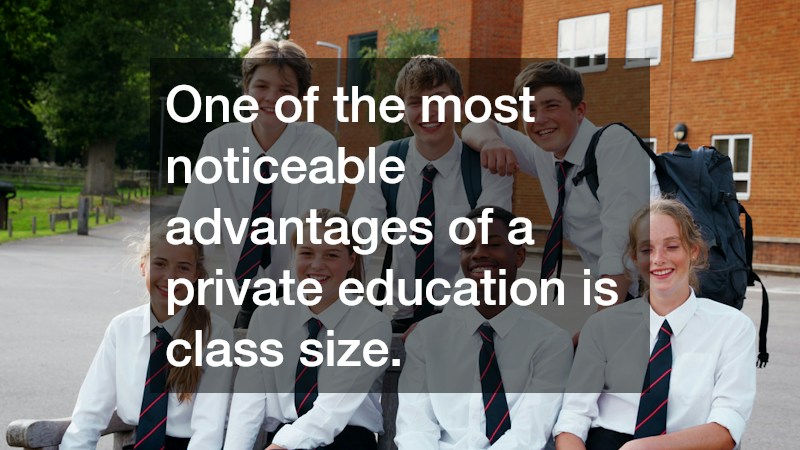
One of the most noticeable advantages of a private education is class size. With fewer students in each room, teachers can move beyond one-size-fits-all instruction and adjust their approach to match how each student learns. A student who grasps a math concept quickly can be challenged with more advanced problems, while a classmate who needs extra practice can get it without falling behind. Smaller groups also make classroom discussion more meaningful. Students have more opportunities to share ideas, defend their reasoning, and learn from one another. Over time, this active participation strengthens critical thinking and communication skills. These abilities matter well beyond middle school, since they form the backbone of success in advanced high school courses, college seminars, and eventually the workplace.
Teachers Who Know Each Student
In a close-knit school community, teachers often know their students as individuals rather than names on a roster. They notice when a usually talkative student grows quiet, when a strong reader starts struggling, or when a child seems ready for a bigger challenge. This awareness allows educators to step in early, whether that means offering encouragement, connecting with parents, or suggesting a new approach. Many private schools also build advisory programs into the schedule, pairing each student with a mentor who checks in regularly on both academic progress and overall well-being. For students, having a trusted adult who genuinely understands them can be a powerful source of stability. It teaches them that asking for help is a strength, a lesson that serves them well throughout life.
Building Study Habits and Independence
Long-term success depends on more than knowing the right answers. Students also need to know how to learn. Private middle schools often place a strong emphasis on executive function skills such as planning assignments, breaking large projects into manageable steps, taking effective notes, and preparing for tests. These skills are taught deliberately and reinforced across subjects. As students progress through the grades, teachers gradually give them more ownership over their work. By the time they reach high school, many students are already comfortable managing deadlines and balancing multiple responsibilities. This independence reduces the stress that often comes with the jump to high school coursework, and it lays the foundation for the self-direction that college and careers will require.
Character, Confidence, and Belonging
Academic growth is only part of the picture. Middle school is also when students begin figuring out who they are and where they fit in. Private schools frequently weave character education, leadership opportunities, and service projects into daily life. Students might lead a school assembly, mentor younger children, or take part in community volunteer work. Experiences like these build empathy, responsibility, and a sense of purpose. A strong school culture can also give students a feeling of belonging during years that are often socially complicated. When children feel safe and valued, they are more willing to take healthy risks, like trying out for a play, joining a robotics team, or speaking up in class. That confidence becomes part of who they are.
Preparing for High School and Beyond
The ultimate goal of a strong middle school experience is readiness for what comes next. Families who choose private middle schools often find that their children enter high school with solid academic preparation, well-developed study skills, and the maturity to advocate for themselves. Many schools also provide guidance during the high school selection process, helping families explore options and prepare applications. Just as importantly, students leave with a clearer sense of their interests and strengths. A child who discovered a passion for science, writing, or the arts in middle school may carry that interest into advanced coursework, extracurricular activities, and even a future career path.
Setting the Stage for What Comes Next
The middle school years pass quickly, but their impact lasts for decades. With smaller classes, attentive teachers, intentional skill building, and a focus on character, private schools give students a strong launching point for high school, college, and life beyond the classroom. For families weighing their options, the right middle school can be one of the most meaningful investments in a child’s future. Visiting campuses, talking with teachers, and asking how each school supports students both academically and personally can help parents find a community where their child will truly thrive.