
Highlights
-
Public schools are primarily supported by public funding, while private schools generally depend on tuition and other private sources of revenue.
-
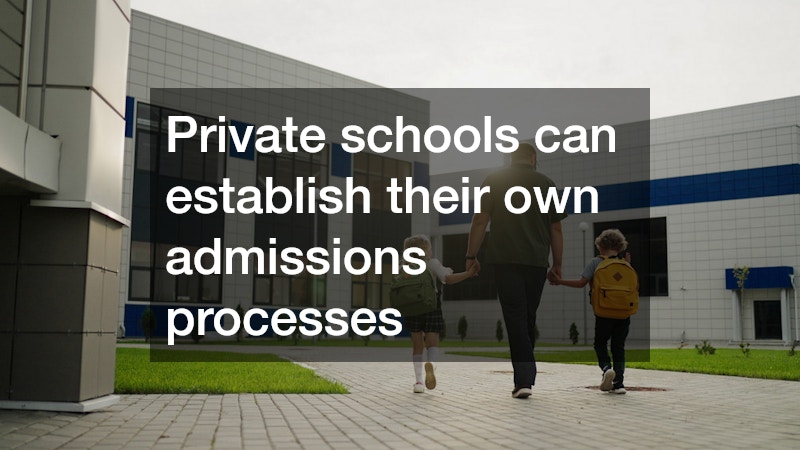
Private schools can establish their own admissions processes, while traditional public schools generally serve students within designated communities or districts.
-
Curriculum, educational philosophy, class size, and specialized programs can vary significantly between individual schools.
-
Families considering private schools should account for tuition as well as transportation, uniforms, activities, technology, and other potential expenses.
-
Extracurricular activities and school culture can be important considerations regardless of whether a student attends a public or private institution.
-
Families should compare individual schools based on their child’s needs instead of assuming one category consistently provides a better education.
How Do Public and Private Schools Differ in the Way They Operate?
The most fundamental difference is that public schools are government-funded institutions, while private schools are not primarily supported by public funds. According to the National Center for Education Statistics, approximately 4.7 million K–12 students attended private schools in fall 2021, representing about 9% of combined public and private school enrollment.
Private institutions can include Catholic, other religious, and nonsectarian schools, so even schools within the private category can operate very differently from one another. Public schools also vary considerably according to location, district policies, funding, leadership, and community needs. As a result, families comparing their options should investigate individual institutions rather than assuming that every public or private school follows the same model.
How Does the Admissions Process Differ?
Traditional public schools generally provide access to students living within their designated district or attendance boundaries, although magnet schools, charter schools, and other public options can have different enrollment procedures. Private schools typically establish their own admissions processes, which can include applications, interviews, academic records, recommendations, assessments, or other requirements. The U.S. Department of Education provides information about multiple educational choices, including traditional public, private, charter, magnet, and other learning options. Families considering private schools should research application deadlines well in advance because admissions procedures can take time and available spaces may be limited. Understanding enrollment requirements early can also help parents avoid overlooking documents, assessments, financial aid applications, or other important steps.
Are There Differences in Curriculum and Teaching?
Curriculum and instructional approaches can differ, although the extent of those differences depends on the individual schools being compared. Public schools operate within state and local education systems and must meet applicable educational requirements, while private institutions may have greater flexibility to establish particular educational philosophies, religious instruction, specialized curricula, or teaching approaches. This can give families additional choices when looking for an educational environment that matches their priorities. Parents should investigate actual course offerings rather than judging a school solely by its public or private classification. Advanced coursework, foreign languages, technology, arts, vocational opportunities, academic intervention, and other programs can vary dramatically between schools, making the specific curriculum more useful for comparison than a broad label.
What Should Families Compare About Academics?
Families should compare measurable academic opportunities while also examining how each school supports individual students. A school with an excellent reputation may still lack a program that a particular student needs, while another institution may offer specialized opportunities that closely match the child’s abilities or interests. Parents can make comparisons easier by researching factors such as:
-
Available advanced or accelerated courses
-
Academic support and tutoring programs
-
Foreign language opportunities
-
Technology and computer science programs
-
Arts, music, and performing arts education
-
Student access to teachers outside normal class time
-
Preparation for transitions into middle school, high school, or college
Private schools may emphasize particular subjects or educational philosophies, but public schools can also offer extensive specialized programs. The strongest choice depends on which opportunities are actually available to the student.
Do Class Sizes Differ Between Public and Private Schools?
Class size is frequently discussed when families compare educational options, but averages should not replace school-specific research. A private institution may offer smaller classes in some grades, while a public school might provide smaller groups for particular subjects or specialized programs. Enrollment figures alone also do not tell families how many students will actually be in their child’s mathematics, science, English, or elective classes.
Parents should ask prospective schools directly about typical classroom sizes at the grade level their child would enter. It is also useful to ask how teachers provide individual assistance, how frequently students participate in small-group instruction, and what happens when a student struggles academically. These practical details can reveal more about the learning environment than a single school-wide student-to-teacher statistic.
How Can School Culture Be Different?
School culture can differ considerably even between two schools located only a few miles apart. Expectations surrounding behavior, homework, technology, uniforms, parent involvement, discipline, competition, collaboration, and student independence can all contribute to the everyday experience. Some private schools may incorporate religious traditions or specific educational philosophies, while others are secular institutions without a religious affiliation.
Families should visit prospective schools whenever possible to see how these policies work in practice. The Centers for Disease Control and Prevention reports that students who feel connected to their schools are more likely to have higher grades and test scores, better attendance, and graduate from high school. Finding an environment where a child can develop a sense of belonging can therefore be an important part of comparing schools.
How Do Costs Compare?
Cost is one of the clearest practical differences because traditional public schools do not charge families tuition for attendance, while private institutions generally do. Private school tuition can vary widely depending on location, grade level, facilities, programs, and the type of institution. Families should also investigate financial assistance because scholarships, grants, discounts, or payment plans may be available through individual schools or other programs.
Tuition should not be the only expense included in the family budget. Before enrolling, parents should ask whether they could also be responsible for:
-
Application and registration fees
-
Uniforms or dress-code requirements
-
Books, laptops, tablets, or other technology
-
Transportation to and from school
-
Meals and food programs
-
Athletics, clubs, and extracurricular activities
-
Field trips and special programs
-
Before-school or after-school care
Understanding the complete cost provides a more accurate comparison between educational options.
Are Extracurricular Opportunities Different?
Both public and private schools can provide extensive extracurricular opportunities, but the activities available depend heavily on enrollment, funding, facilities, staffing, and student interest. Larger public schools may have enough students to support numerous athletic teams, clubs, performing arts groups, and specialized organizations. Smaller schools may offer fewer activities overall but could provide students with more opportunities to participate in the programs that are available.
Families should consider which activities genuinely matter to their child. A student interested in competitive athletics may prioritize a school with established sports programs, while another student may care more about theater, robotics, music, debate, or community service. Parents comparing private schools with public alternatives should therefore look beyond academics and evaluate the complete student experience each institution provides.
Which Type of School Is Better for a Particular Student?
Neither public nor private education is inherently the best choice for every student. The appropriate environment depends on the child’s learning needs, personality, interests, available local schools, family priorities, transportation requirements, and financial circumstances. Even two siblings within the same family could potentially thrive in different educational environments.
Families should identify their most important priorities and then evaluate specific schools against those criteria. Campus visits, conversations with administrators, curriculum information, extracurricular offerings, student-support resources, and discussions with current families can provide valuable information. Parents should also involve children in the process when appropriate, particularly as students become older and develop stronger academic and extracurricular interests.
What Matters Most When Comparing Public and Private Schools?
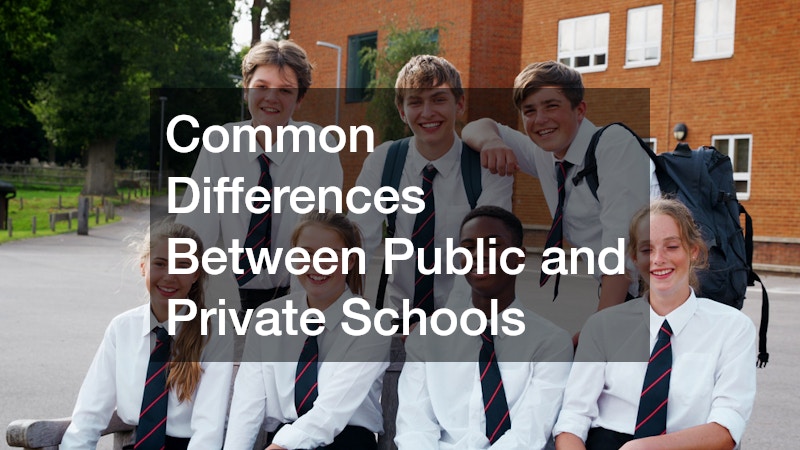
Public and private education differ in funding, admissions, costs, governance, curriculum flexibility, and other important areas, but those distinctions only provide a starting point. Individual schools ultimately matter more than broad categories because educational quality, culture, programs, and student experiences can vary within both sectors. Families should avoid selecting a school simply because it carries a public or private label.
The strongest decision comes from evaluating what a particular student needs to learn and thrive. Parents comparing public options with private schools should consider academics, costs, class environment, extracurricular opportunities, school culture, transportation, and available support together. By researching individual institutions and asking detailed questions, families can choose an educational environment that aligns with their priorities while giving their child meaningful opportunities for academic and personal growth.