
Highlights
- Students train across multiple disciplines, including music, theatre, and dance, rather than specializing in just one.
- Academic coursework and arts training run on parallel tracks, not as separate or competing priorities.
- Performance opportunities begin early and become more demanding as students advance through each grade level.
- Faculty typically combine classroom teaching credentials with professional performance or production experience.
- Programs are designed to build skills continuously from early childhood through middle school and beyond.
- Students graduate with a portfolio of performance experience that supports college auditions and applications.
What Kind of Training Do Students Actually Receive?
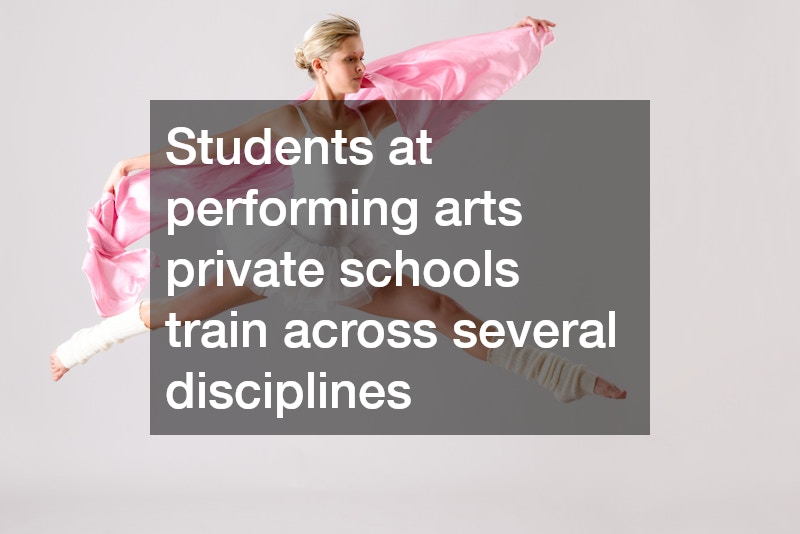
Students at performing arts private schools train across several disciplines rather than committing to a single specialty from day one. A typical week includes coursework in music, theatre, and dance, often supplemented by technical training in stagecraft, choreography, or vocal performance.
This breadth is intentional. Rather than pushing students toward early specialization, most programs want students to understand how the disciplines connect before they narrow their focus in upper grades. Music students learn how movement supports stage presence; theatre students learn how vocal technique shapes a performance. Class sizes tend to run smaller than in a typical academic subject, since individualized coaching is central to skill-building in the arts. Students also work with rotating instructors who specialize in different techniques, which exposes them to multiple teaching styles and artistic perspectives. By the time students reach the upper grades, most have a clear sense of where their strongest interests and abilities lie, built on a genuinely broad foundation rather than an early guess.
How Do These Schools Balance Arts Training With Academics?
Academics and arts training run on parallel tracks rather than one being treated as an extracurricular add-on to the other. Core subjects such as math, science, English, and history follow standard grade-level benchmarks, often accredited the same way any traditional private school would be, while arts blocks are built directly into the daily schedule rather than squeezed in after school. This structure requires more disciplined time management than a conventional private school, particularly during production season when rehearsal schedules intensify. Students learn to prioritize, manage deadlines across both academic and performance commitments, and communicate proactively with teachers when conflicts arise. Parents evaluating a program should ask specifically how the school handles scheduling during tech week or performance runs, since this is typically where the balance gets tested. Schools with a strong track record usually have clear, well-established policies for make-up work and flexible deadlines rather than treating it as a case-by-case negotiation each time.
When Do Students Start Performing?
Performance opportunities begin remarkably early and scale up in complexity as students advance. Programs that structure their curriculum from an early childhood private preschool through middle school and beyond typically introduce students to informal in-class performances and low-pressure recitals well before formal auditions ever enter the picture. Here’s how exposure typically progresses across the grade bands:
- Private preschool and early elementary: Movement games, simple songs, and short in-class showcases build comfort with performing in front of others.
- Elementary grades: Students take part in small ensemble pieces and grade-level productions with modest speaking or musical roles.
- Private middle school: Auditions become more competitive, and students begin taking on lead or featured roles in full-scale productions.
- Upper grades: Students manage demanding rehearsal schedules alongside academics, often performing in multiple productions per year.
This gradual progression matters because it builds performance confidence incrementally, rather than expecting students to handle high-pressure auditions without prior stage experience.
Who Teaches at a Performing Arts School?
Faculty at these schools typically bring a combination of classroom teaching credentials and direct professional experience in performance or production. It’s common to find theatre teachers who have worked professionally as directors or actors, music instructors who have performed with orchestras or touring ensembles, and dance faculty with backgrounds in professional companies. This dual expertise matters because it means students are learning technique from people who have applied it in real professional settings, not solely from an academic curriculum. The Educational Theatre Association reports that the vast majority of school administrators believe theatre training strengthens students’ critical thinking, collaboration, and communication skills, underscoring why schools invest specifically in instructors who can teach both the craft and the discipline behind it. Parents touring a program should ask directly about faculty backgrounds, since a strong professional pedigree among instructors is often a reliable indicator of the training quality students will actually receive.
What Do Students Walk Away With by Graduation?
Students who complete a performing arts program graduate with something a purely academic transcript can’t offer: a documented body of performance experience. By senior year, most students have participated in multiple productions, developed audition material, and built relationships with faculty who can speak specifically to their growth as performers. This matters enormously for students pursuing arts programs in college, where audition-based admissions are common and applicants are expected to demonstrate sustained training rather than casual interest. The National Association for Music Education has long advocated for consistent, well-balanced music instruction precisely because that continuity produces stronger outcomes than sporadic exposure, a principle that applies just as directly to theatre and dance training. Even students who don’t pursue the arts professionally leave with skills that transfer broadly: public speaking confidence, collaborative problem-solving, and the discipline of meeting a deadline that can’t be moved because a curtain is going up on schedule.
Choosing among performing arts private schools means evaluating far more than audition requirements or a school’s production history. The strongest programs build technical skill gradually, starting as early as private preschool and continuing through private middle school and beyond, while keeping academics on equal footing with arts training. Research from organizations like the National Association for the Education of Young Children consistently shows that creative expression supports cognitive and social development from the earliest years, which is exactly the foundation these schools are built to reinforce over time. A program that can clearly explain its training progression, introduce you to faculty with real professional experience, and show a genuine record of student performance opportunities is one worth taking seriously. Students who come through that kind of structure leave with more than a diploma; they leave with a body of work and a level of confidence that’s difficult to replicate anywhere else.