
Online preschools provide early childhood education through virtual platforms, which is increasingly popular due to technological advancements. This innovative approach offers children access to interactive educational materials anytime, anywhere, as long as they have an internet connection. Parents often appreciate the flexibility that online preschools provide, allowing them to schedule learning sessions that suit their family’s lifestyle.
Despite these conveniences, online preschools require active participation from parents to guide their children through the activities. This can be both a benefit and a challenge, as it allows parents to be directly involved in their child’s education but also necessitates a significant time commitment.
The need for a personal computer, tablet, or smartphone and a reliable internet connection can be barriers for some families.
Furthermore, online preschools often incorporate multimedia elements to create a rich learning environment. Videos, animations, and interactive quizzes can cater to various learning styles, making the education process more engaging. However, this reliance on technology may also limit the development of social skills that naturally occur in traditional classroom settings.
The Benefits of Local Preschools
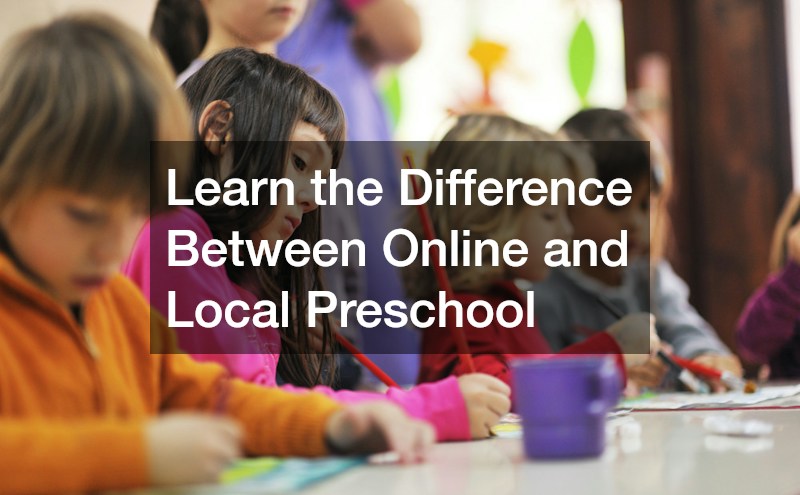
Local preschools play a pivotal role in child development, offering a structured environment where children can learn social skills. Attending a local preschool provides children with the opportunity to interact with peers, fostering the development of interpersonal skills such as sharing and teamwork. Both educators and parents recognize that these face-to-face interactions are essential for a child’s social learning.
Moreover, local preschools often have well-designed curricula that cater to individual learning styles. Dedicated educators tailor their teaching methods to accommodate the diverse needs of students, ensuring a comprehensive understanding of various subjects. The physical presence of teachers allows for immediate feedback and guidance, which can significantly enhance the learning experience.
In addition to academic learning, local preschools frequently include extracurricular activities aimed at physical development. Engaging in activities such as music, arts, and sports helps in developing both fine and gross motor skills. The holistic educational approach of local preschools often leads to well-rounded development in young children.
The Drawbacks of Online Learning for Young Children
While online preschools offer flexibility, they might not be suitable for all children, particularly due to limited social interaction. The lack of face-to-face engagement with peers can impact a child’s ability to develop necessary social skills. Young children typically have a natural inclination towards social play, which is fundamental to their cognitive and emotional development.
The absence of direct teacher supervision can also be challenging for young learners. Teachers play a critical role in encouraging participation and maintaining discipline, something that technology has yet to replicate successfully. Additionally, children may encounter distractions at home that could detract from their learning focus.
Parents may find that balancing work responsibilities while ensuring their child’s comprehensive online education can be demanding. For some families, the cost and complexity of digital devices and online educational resources might pose significant challenges. As a result, despite the potential of online preschools, they may not always meet the social or educational needs of every child.
Community Engagement and Local Preschools
Local preschools often offer the benefit of building strong community connections. Parents and teachers can forge partnerships that support a child’s educational journey, enhancing the learning environment through collaboration. Participation in local events and activities is yet another way these preschools unite families, creating a network of support.
Engaging in community-based projects offers children real-world learning experiences, prompting them to understand their role within society. Field trips and community service activities are commonly integrated into the local preschool curriculum, fostering a sense of responsibility and awareness among children. Such experiences are invaluable in helping children find their place and purpose within their community.
Additionally, local preschools often serve as a support group for parents, offering advice and resources on early childhood education and parenting strategies. These interactions can lead to long-lasting friendships and networks that can benefit families well beyond the preschool years. The blend of educational support and community involvement offered by local preschools typically enriches both child and family development.
Choosing Between Online and Local Preschool
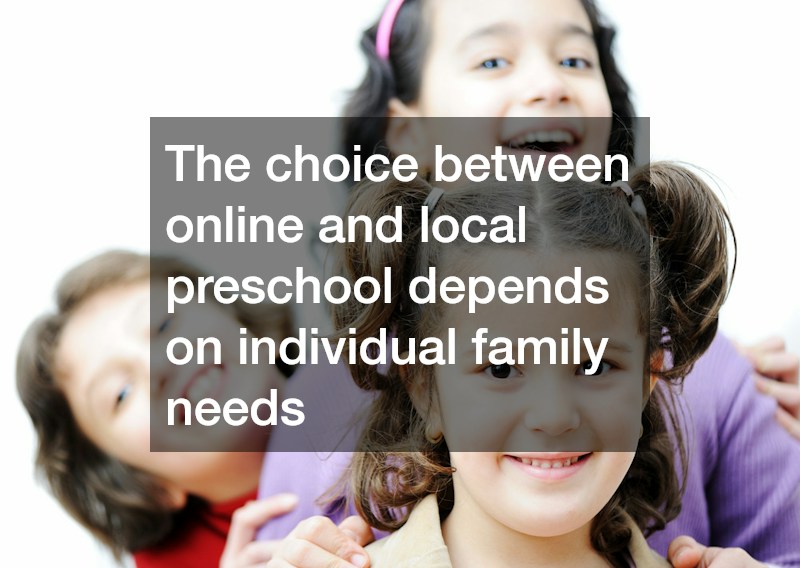
Ultimately, the choice between online and local preschool depends on individual family needs, lifestyle, and preferences. Online preschools offer flexibility and convenience but may lack the critical social learning opportunities available at local preschools. Parents should consider these factors carefully when making their educational choices.
Reflecting on a child’s learning style and social needs is imperative when selecting the right type of preschool education. For families seeking a rich social environment or personal teacher interaction, local preschools might be the preferable option. However, the variety of subjects and flexibility in scheduling typical of online preschools can appeal to families with unique educational needs or time constraints.
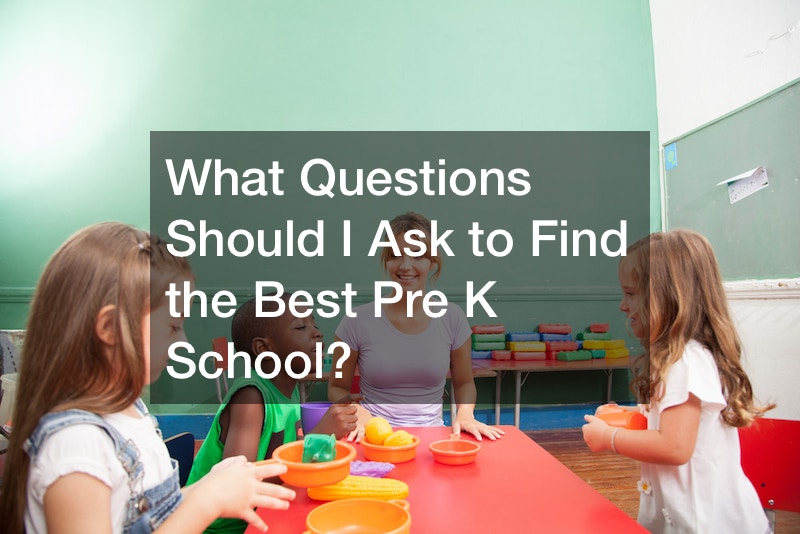
In considering a local preschool, investigate its reputation, curriculum, and the engagement opportunities it offers. A well-rounded decision involves understanding what each type of preschool offers and matching these to the child’s developmental requirements. By being informed and deliberate in their choice, parents can ensure enriching and beneficial preschool education for their children.